Blog
Does duct cleaning help allergies? What the EPA actually says
Sometimes, and less often than the advertisements suggest. Here is when cleaning the ducts is worth it, and when the money is better spent somewhere else.
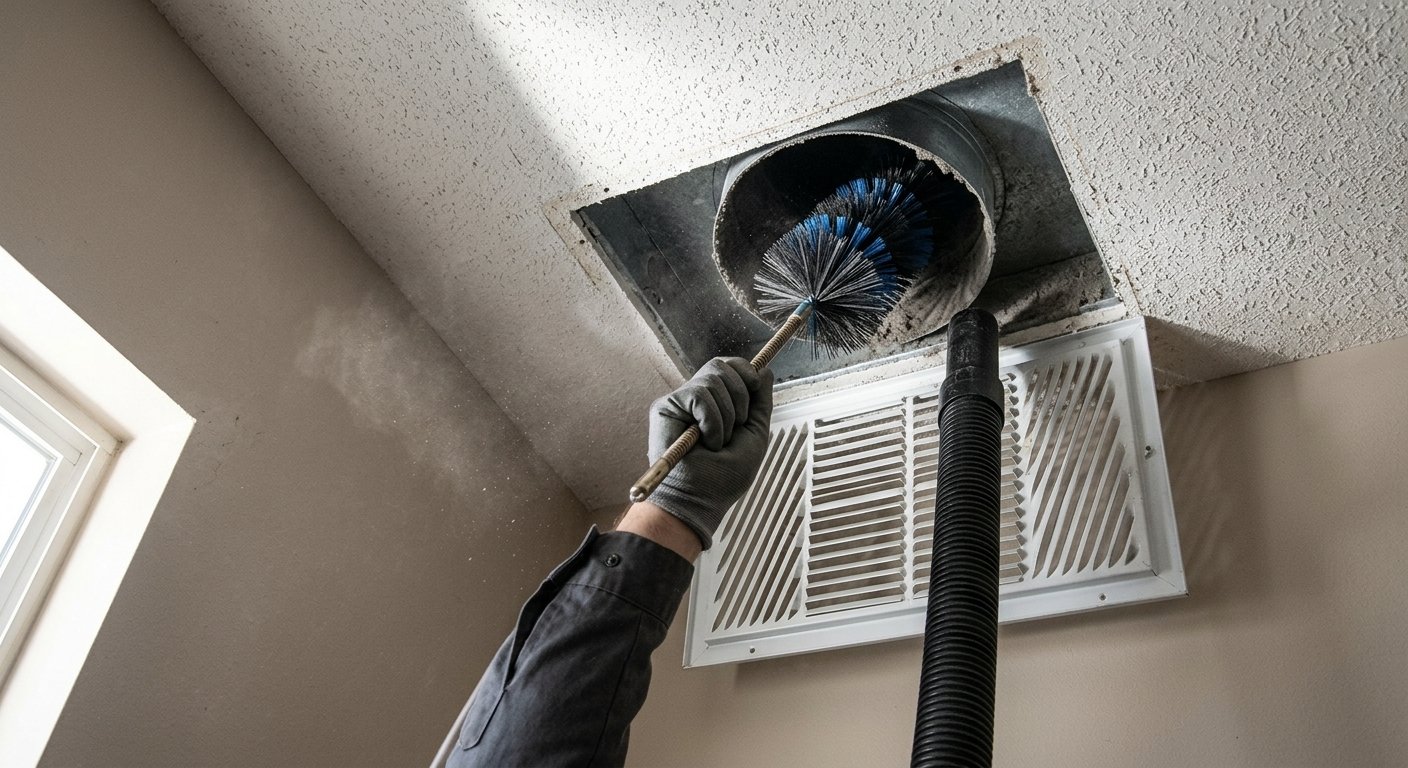
Most of what makes a house dusty is not in the ducts. It comes in on shoes, pets and open windows, and it is made inside by people, fabrics and cooking. Cleaning the ducts changes none of that.
The U.S. Environmental Protection Agency puts it plainly: duct cleaning has never been shown to prevent health problems, and dust that sits on the inside of a duct mostly stays there. What the EPA suggests is having it done when there is a specific reason.
When the EPA says to consider it
When there is visible mold growing inside the ducts or on other parts of the system. When the ducts are infested with insects or rodents. And when they are clogged with so much dust and debris that it blows out of the registers into the rooms.
Two more reasons to look inside before deciding: building work done while the system was running, and a house you have just moved into with no idea when the ducts were last opened.
What to try first
Change the furnace filter on schedule, using the best filter the system is designed to take. Keep furniture and rugs off the return grilles. Vacuum with a HEPA filter. If one room is the problem, look at that room's register before blaming the whole system.
None of that is as satisfying as a truck in the driveway, and all of it costs less.
If you do have it done
Ask to see inside first. A camera down one or two runs shows whether the ducts are dirty, damaged or fine, and a duct that is fine does not need cleaning.
Done properly, air duct cleaning puts the whole system under negative pressure with a HEPA-filtered machine, so whatever is loosened is pulled out of the house rather than blown into it.
Questions
Asked about this
Sometimes a little, often not noticeably. Most household dust is brought in and made every day; a clean system stops adding to it but does not stop the rest.
There is no fixed schedule. Industry groups often suggest every three to five years, but the better answer is when there is a reason: mold, pests, heavy debris, or building work.
Be cautious. The EPA advises understanding exactly what would be applied, where and why before agreeing to it, and it does not recommend these products as a routine part of cleaning.
Book a visit.
Book two services together and they are quoted as one visit.
Mon–Sat, 9am–7pm. A person answers.