
Blog
Why the dryer takes two cycles to dry one load
The clothes come out damp, the top of the machine is hot and the lint screen is clean. The dryer is usually fine. The vent behind it usually is not.
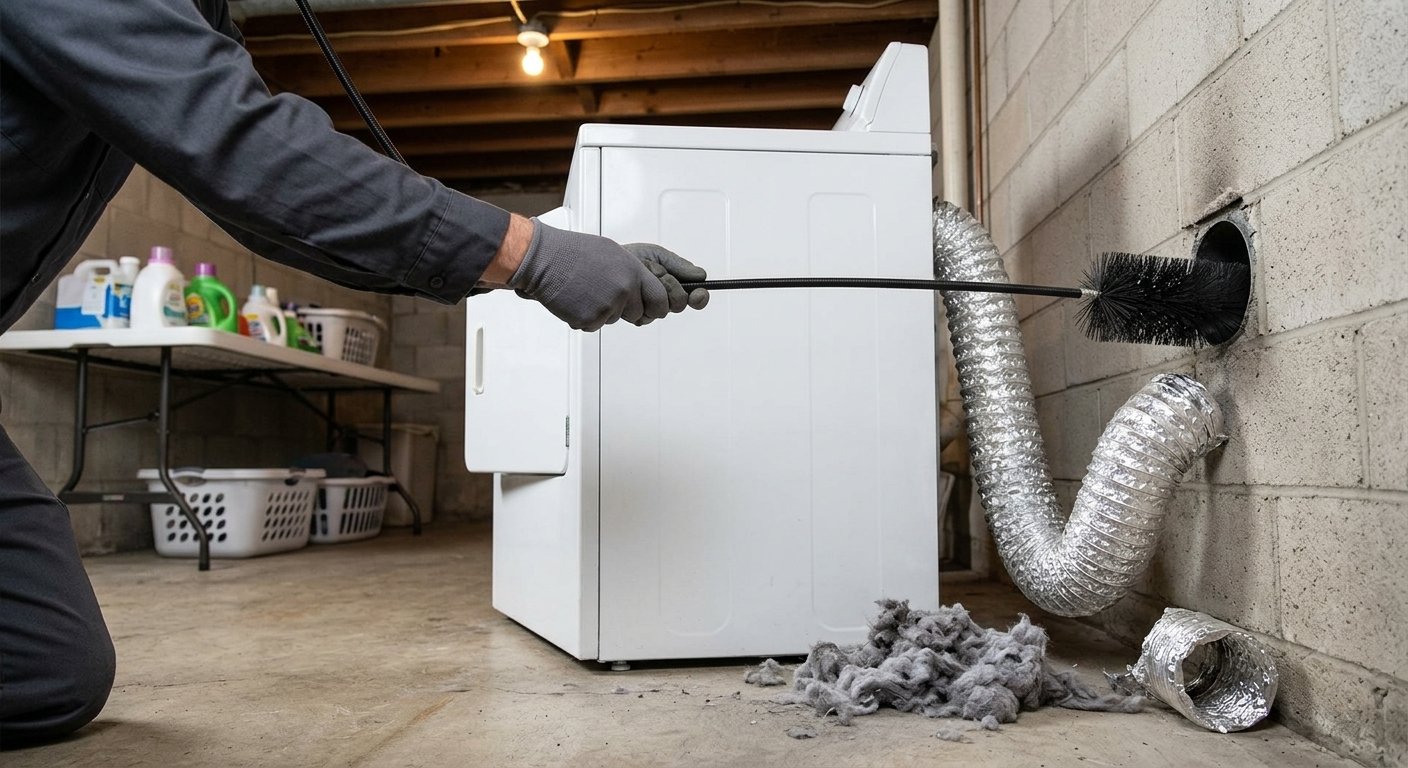
A dryer pushes hot, wet air through a duct to the outside wall. The lint screen catches most of the fluff but not all of it, and what gets past settles wherever the air slows down: at bends, at joints and behind the flap on the outside cap.
What a restricted vent looks like
Loads take longer than they used to, or need a second cycle. The laundry room feels warmer and damper than it should. The outside of the machine is hot to the touch. And outside, the flap on the vent cap barely lifts while the dryer runs, or there is lint caught in it.
Why it matters
Lint burns easily, and a dryer that cannot get its heat out runs hotter and for longer. The U.S. Fire Administration names failure to clean as the leading cause of home clothes dryer fires.
It costs money as well: a load that needs two cycles uses the energy of two.
Five minutes to check it yourself
Clean the lint screen, start the dryer on a heat setting and go outside. You should feel a strong, warm flow at the cap and see the flap open wide. If the flow is weak, the problem is somewhere between the machine and the wall.
Pull the dryer forward and look at the connector behind it. Thin plastic or foil accordion duct crushes easily and holds lint in its ridges. Most dryer manufacturers call for rigid or semi-rigid metal duct, kept as short and as straight as the space allows.
When it is a job for someone else
The stretch inside the wall, the ceiling or the crawlspace is where the blockage usually is, and a lint brush from the hardware store will not reach it. That run is what dryer vent cleaning is for: brushed from end to end, the outside cap cleared and the airflow tested.
Long runs clog sooner. In a rowhouse, common across Baltimore, the laundry is often in the basement or the middle of the house, a long way from the wall the vent comes out of.
Questions
Asked about this
Once a year suits most households. A large family, a long run or a run with several bends may need it sooner; slow drying is the sign to watch for.
Usually, yes. Use rigid or semi-rigid metal, keep it short and straight, and join sections with clamps or foil tape rather than screws, which catch lint.
No. The screen catches most of the lint but not all of it, and what gets past builds up in the duct and at the cap.
Book a visit.
Book two services together and they are quoted as one visit.
Mon–Sat, 9am–7pm. A person answers.