
Blog
Before the first fire of the year: what to check at the hearth
A flashlight, five minutes and a clear look up the flue tell you most of what you need to know before the first cold night.
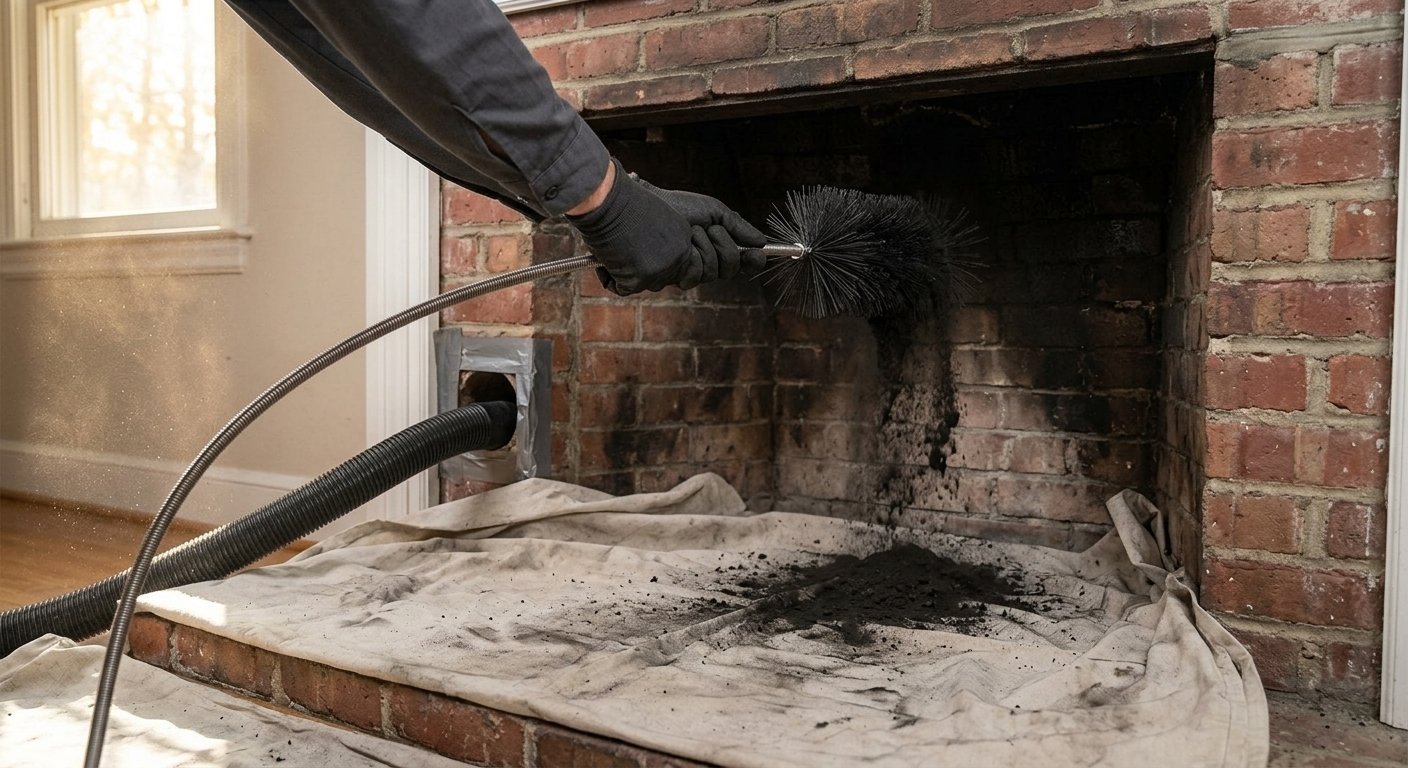
Burning wood leaves creosote on the inside of the flue: a brown or black deposit that starts as soft, flaky soot and, left alone, hardens into a tar-like glaze. It burns, and a chimney fire starts in it.
Five minutes at the hearth
Open the damper. It should move freely and close tight. Shine a flashlight up past it: in a straight flue you should see a patch of daylight at the top, and in any flue a clear run to the first bend.
Then look at what is on the walls. A thin, dry layer of soot is normal. Thick, crusty or shiny deposits, or flakes piling up on the smoke shelf behind the damper, mean it is time for a sweep.
Signs from last season
Smoke that rolled into the room instead of going up. A fire that was hard to keep going. A strong smell of old smoke on humid days. Twigs, leaves or nesting material falling into the firebox. Any one of these is a reason to have the chimney looked at before you light it again.
Why once a year
The fire safety standard for chimneys, NFPA 211, calls for chimneys, fireplaces and vents to be inspected at least once a year and cleaned when the inspection finds they need it. A chimney that is hardly used still collects nests, leaves and fallen mortar.
When it does need it, that is chimney cleaning: the flue brushed its full height, with the fireplace opening sealed so the soot goes into a vacuum and not into the room.
Gas fireplaces and wood stoves need their flues checked too. The deposits are different; the idea is the same.
Questions
Asked about this
Inspected every year, and swept whenever the inspection finds deposits building up. A fireplace used through most of the winter will usually need a sweep every year.
Most chimneys are better with one. A cap keeps out rain, birds and animals, and its mesh stops embers from landing on the roof.
No. They can make deposits easier to brush away, but they do not remove them, and they do nothing about nests, debris or damage.
Book a visit.
Book two services together and they are quoted as one visit.
Mon–Sat, 9am–7pm. A person answers.